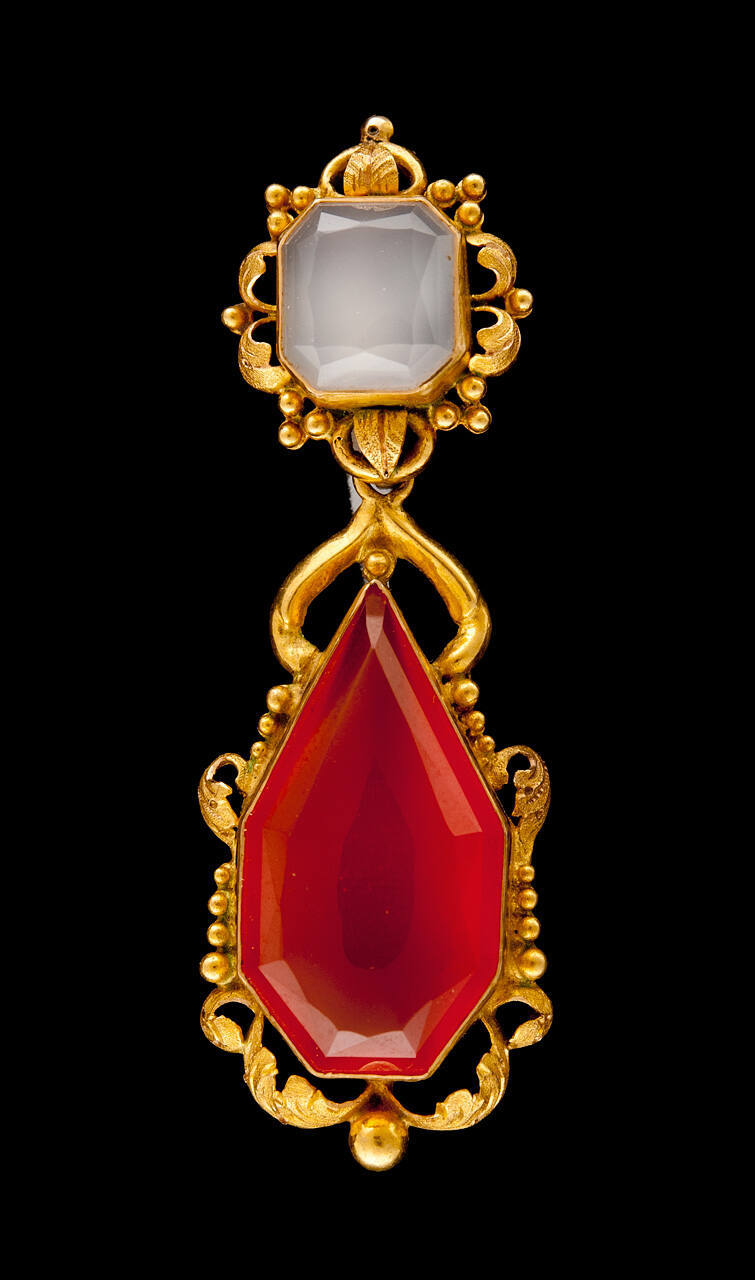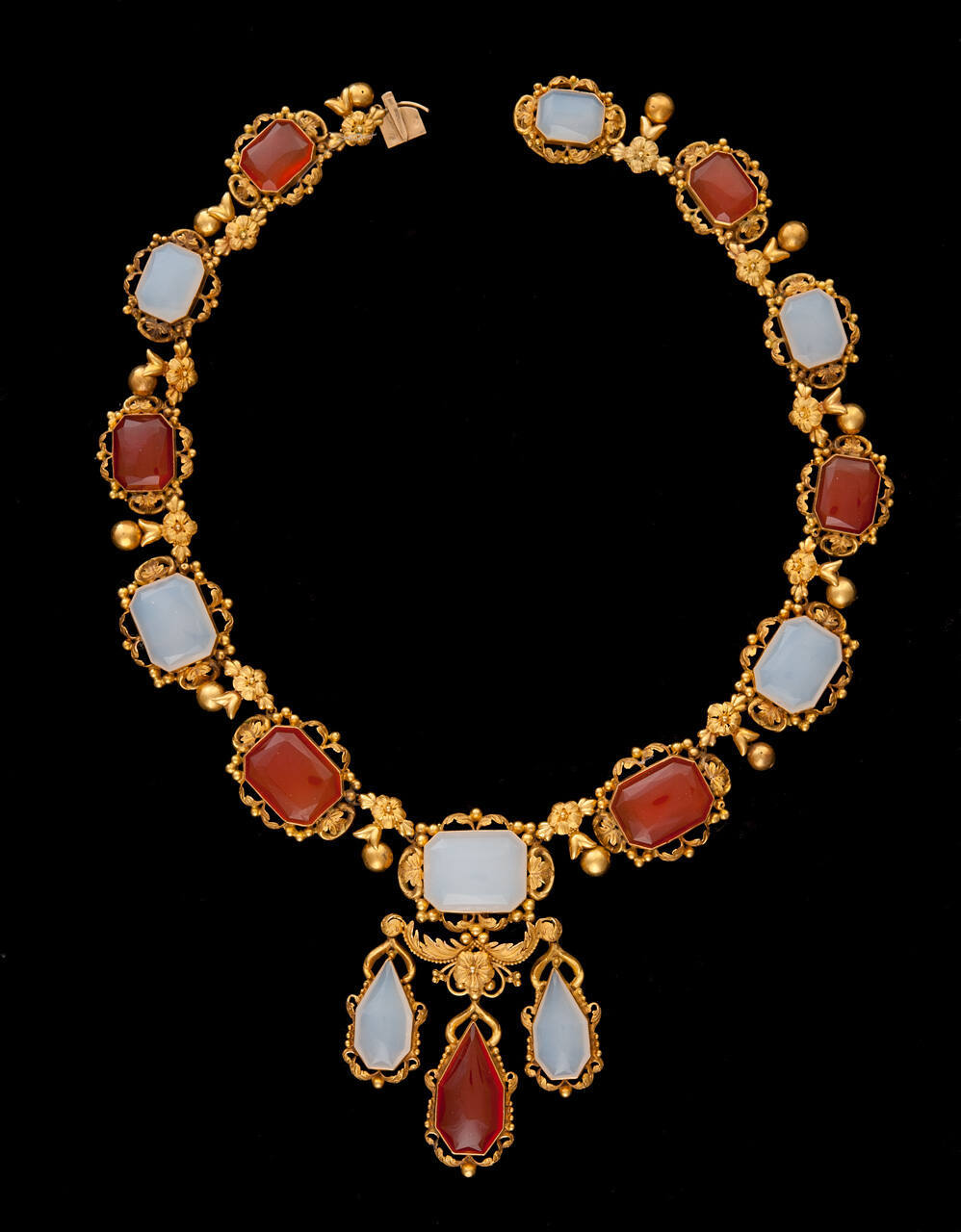


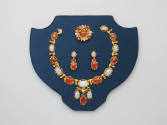
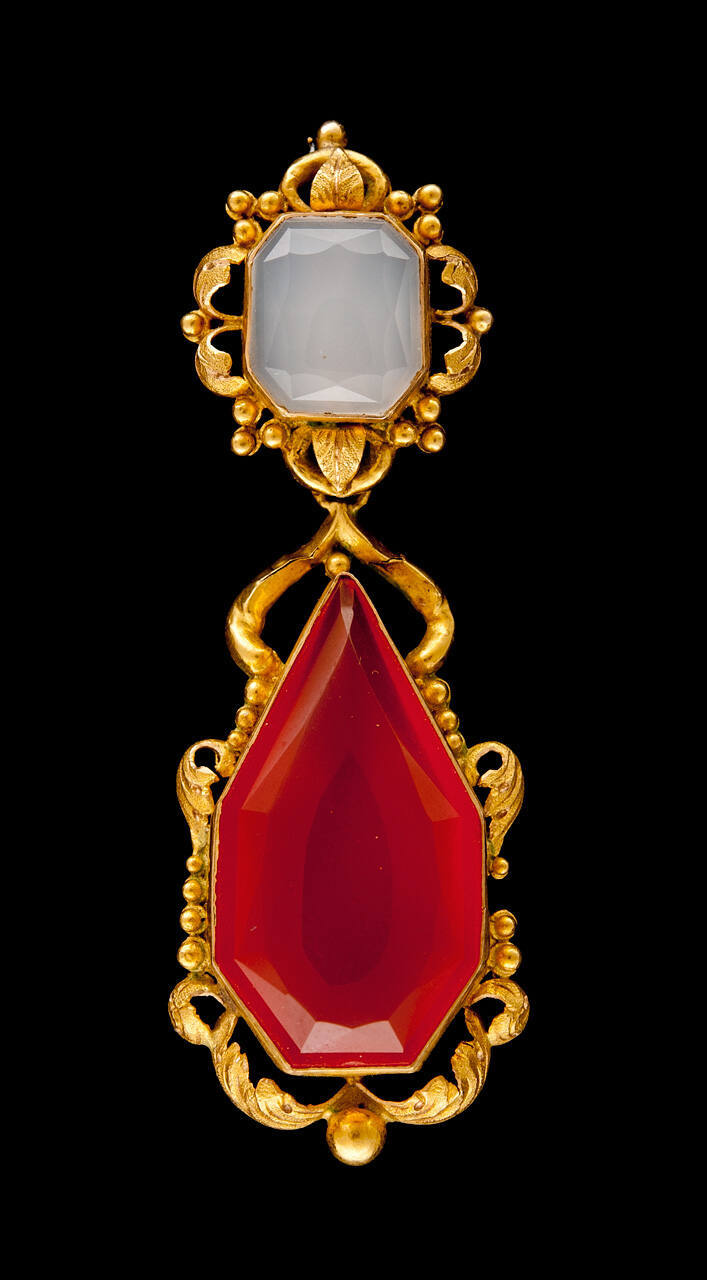
Earring
Manufacturer
Philidor et Pradher
(French, mid-19th century)
Dateca. 1830
MediumGold, carnelian, and agate
DimensionsOverall: 2 3/8 inches (6.03 cm)
Credit LineGift of Mrs. Jacob L. Loose
Object number34-236/23
On View
Not on viewCollections
DescriptionGold necklace set with carnelian and moonstones (chalcedony?), and with pendant.Gallery LabelWomen's fashion of the early and mid-1800s influenced jewelry design. Necklaces complemented low-cut necklines and V-shaped bodices. Earrings were made long enough to be visible under bonnets, hats, and elaborate hairstyles. Brooches were worn many places-at the waist, in the hair, or on ribbons as necklaces or bracelets. These two sets of jewelry, owned by Kansas City philanthropist Ella Loose, would have been worn as a part of her evening dress.
Ella Anna Loose (née Clark, 1860-1945), Kansas City, MO, and Washington, DC, by 1934 [1];
Her gift to The Nelson-Atkins Museum of Art, Kansas City, MO, 1934.
NOTES:
[1] Ella Loose was a charismatic philanthropist who is best known today for donating Loose Park to Kansas City in 1927 in remembrance of her late husband, Jacob Leander Loose (1850-1923), founder of the Loose-Wiles Biscuit company (later Sunshine Biscuits). Ella Loose spent the winters in Washington, DC, where she was a popular member of the social scene. She gave some of her impressive collection of jewelry, art, and furnishings to the Nelson-Atkins, many of which she collected during her travels around the world.
Her gift to The Nelson-Atkins Museum of Art, Kansas City, MO, 1934.
NOTES:
[1] Ella Loose was a charismatic philanthropist who is best known today for donating Loose Park to Kansas City in 1927 in remembrance of her late husband, Jacob Leander Loose (1850-1923), founder of the Loose-Wiles Biscuit company (later Sunshine Biscuits). Ella Loose spent the winters in Washington, DC, where she was a popular member of the social scene. She gave some of her impressive collection of jewelry, art, and furnishings to the Nelson-Atkins, many of which she collected during her travels around the world.
Information about a particular artwork or image, including provenance information,
is based upon historic information and may not be currently accurate or complete.
Research on artwork and images is an ongoing process, and the information about a
particular artwork or image may not reflect the most current information available to the Museum.
If you notice a mistake or have additional information about a particular artwork or image,
please e-mail provenance@nelson-atkins.org.