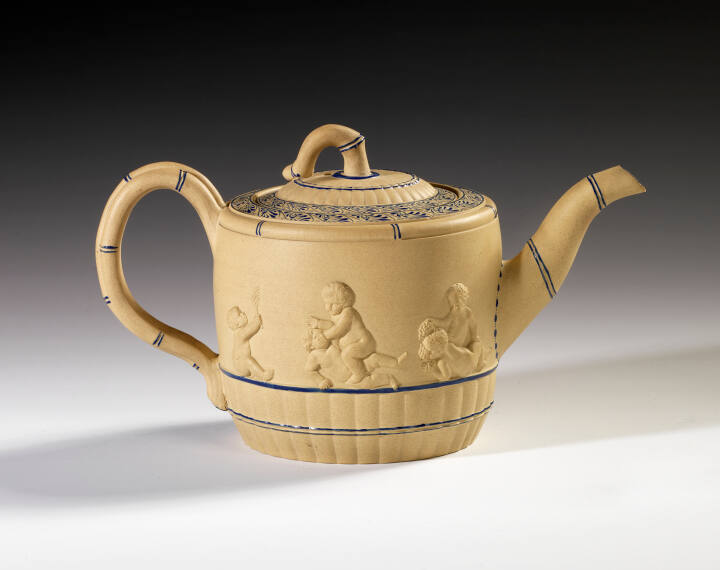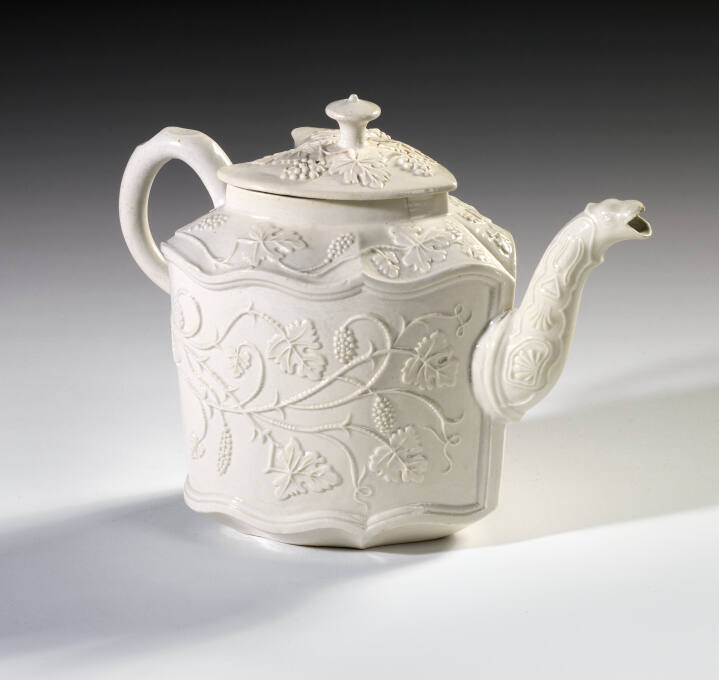
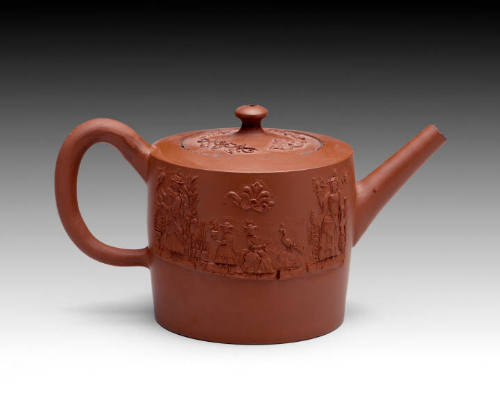
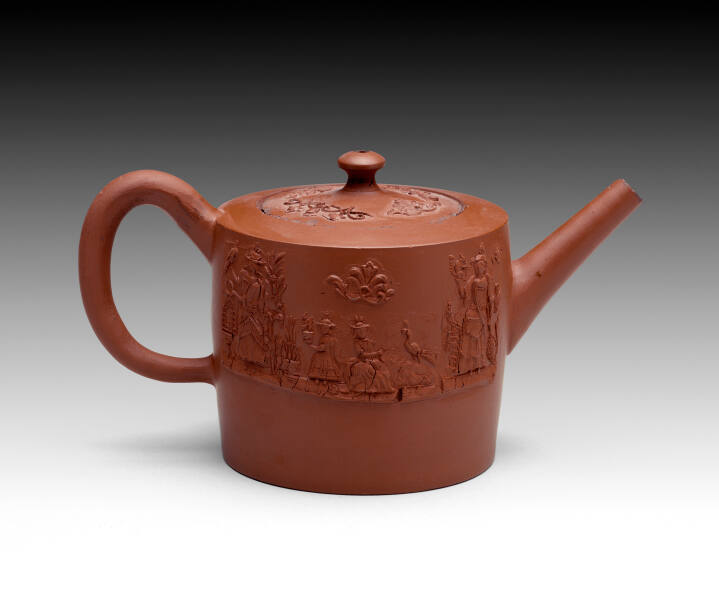
Teapot
CultureEnglish
Dateca. 1765-1775
MediumStoneware
DimensionsOverall: 3 3/4 inches (9.53 cm)
Credit LineGift of Mr. and Mrs. Frank P. Burnap
Object number41-23/195 A,B
On View
On viewGallery Location
- 112
Collections
Gallery LabelBoth this teapot and the one nearby were influenced by Chinese red stoneware, known as Yixing ware. This one is decorated with relief or "sprig" designs while the other teapot is been completely mold-made.
British potters drew upon a great variety of sources including prints, examples of foreign-made ceramics, textiles and metalwork. Italian and French tin-glazed earthenware was imitated in England, as in the small blue-ground Dish based on French models and the vibrantly colored Charger copying Italian wares. Near Eastern textile and metalwork patterns, as seen in the two Chargers on the back wall, were also design sources. As exotic Asian materials, including porcelain, were imported into Europe beginning in the 16th century, they became popular luxury objects and inspired the European fashion for chinoiserie. Chinoiserie, a term derived from the French word chinois (Chinese), denotes a type of European art influenced by Asian art. As the taste for imported Asian objects grew in 17th- and 18th-century Europe, Asian motifs and forms were copied and adapted in objects such as the small Teapot and Stand and Cup and Saucer.
As Asian porcelains were exported, European potters began to assimilate Eastern production methods, design motifs and glazes. Here, the blue and white glaze combination, polychrome glazes and unglazed ceramics reflect a range of glaze options inspired by Asian export porcelains. The Tankard, Jug and Teapot and Stand attempt to reproduce the look of blue and white porcelain with white tin oxide and cobalt blue glazes. The Cup and Saucer and Caudle Cup are examples of English forms enhanced with multi-colored Asian-inspired figures, landscapes and floral motifs, while the Water Buffalo is an example of an Asian figure with an English-style glaze. The unglazed red stoneware Teapots were inspired by Chinese red stoneware, called Yixing ware, imported into Europe beginning in the 17th century.
British potters drew upon a great variety of sources including prints, examples of foreign-made ceramics, textiles and metalwork. Italian and French tin-glazed earthenware was imitated in England, as in the small blue-ground Dish based on French models and the vibrantly colored Charger copying Italian wares. Near Eastern textile and metalwork patterns, as seen in the two Chargers on the back wall, were also design sources. As exotic Asian materials, including porcelain, were imported into Europe beginning in the 16th century, they became popular luxury objects and inspired the European fashion for chinoiserie. Chinoiserie, a term derived from the French word chinois (Chinese), denotes a type of European art influenced by Asian art. As the taste for imported Asian objects grew in 17th- and 18th-century Europe, Asian motifs and forms were copied and adapted in objects such as the small Teapot and Stand and Cup and Saucer.
As Asian porcelains were exported, European potters began to assimilate Eastern production methods, design motifs and glazes. Here, the blue and white glaze combination, polychrome glazes and unglazed ceramics reflect a range of glaze options inspired by Asian export porcelains. The Tankard, Jug and Teapot and Stand attempt to reproduce the look of blue and white porcelain with white tin oxide and cobalt blue glazes. The Cup and Saucer and Caudle Cup are examples of English forms enhanced with multi-colored Asian-inspired figures, landscapes and floral motifs, while the Water Buffalo is an example of an Asian figure with an English-style glaze. The unglazed red stoneware Teapots were inspired by Chinese red stoneware, called Yixing ware, imported into Europe beginning in the 17th century.
Mr. Frank P. (1861-1957) and Mrs. Harriet C. (1866-1947) Burnap, Kansas City, MO by 1941;
Their gift to The Nelson-Atkins Museum of Art, Kansas City, MO, 1941.
Information about a particular artwork or image, including provenance information,
is based upon historic information and may not be currently accurate or complete.
Research on artwork and images is an ongoing process, and the information about a
particular artwork or image may not reflect the most current information available to the Museum.
If you notice a mistake or have additional information about a particular artwork or image,
please e-mail provenance@nelson-atkins.org.