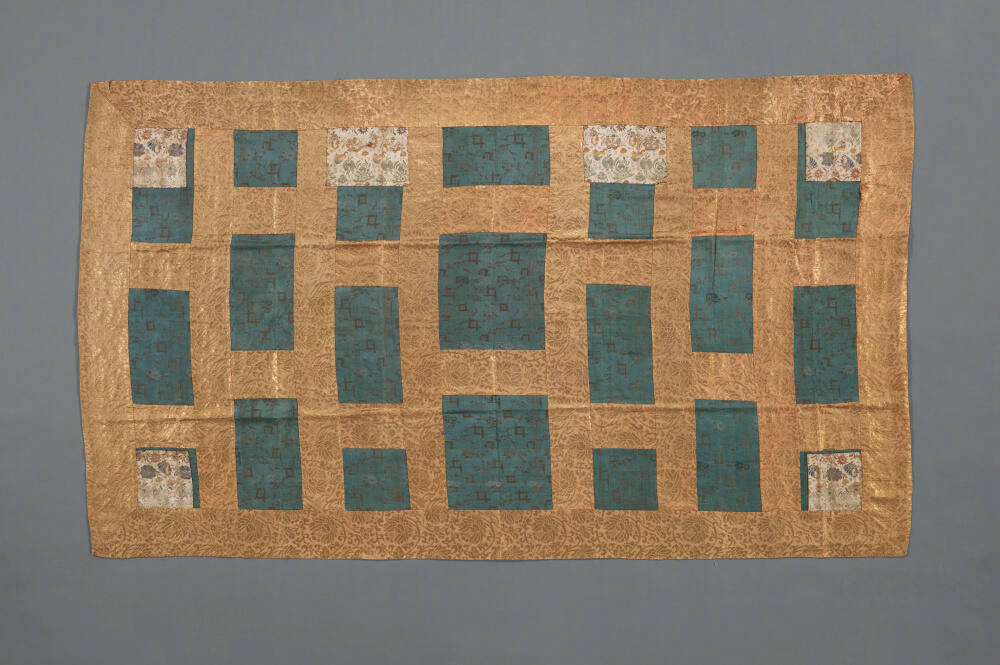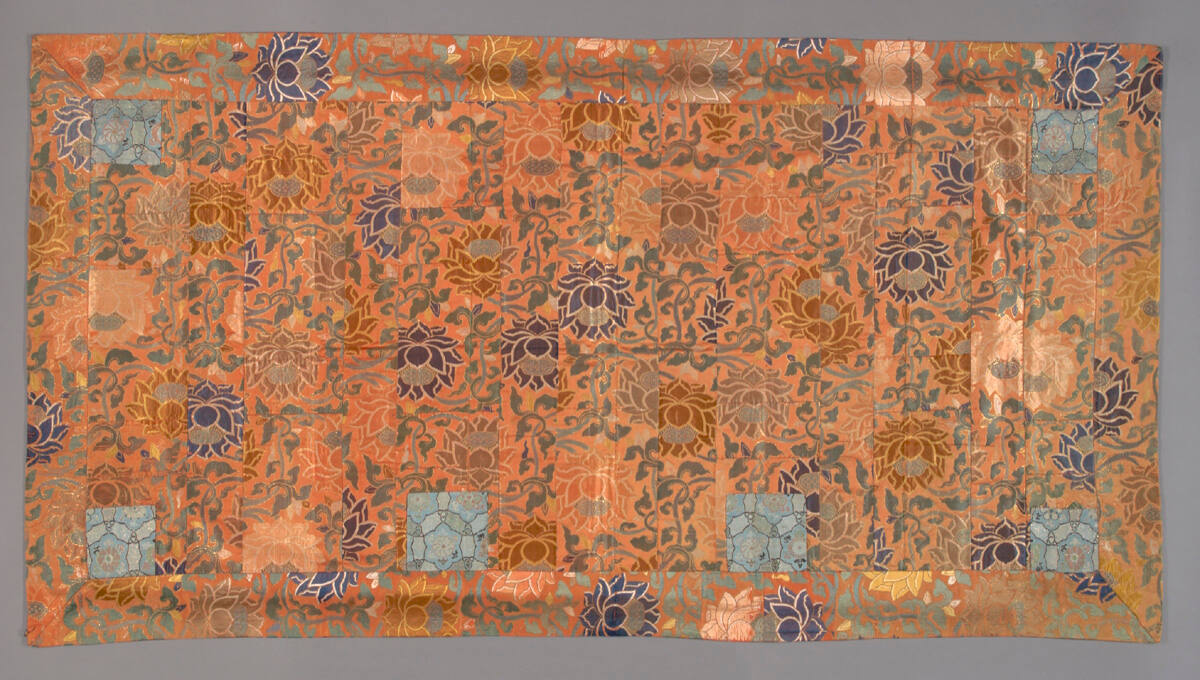

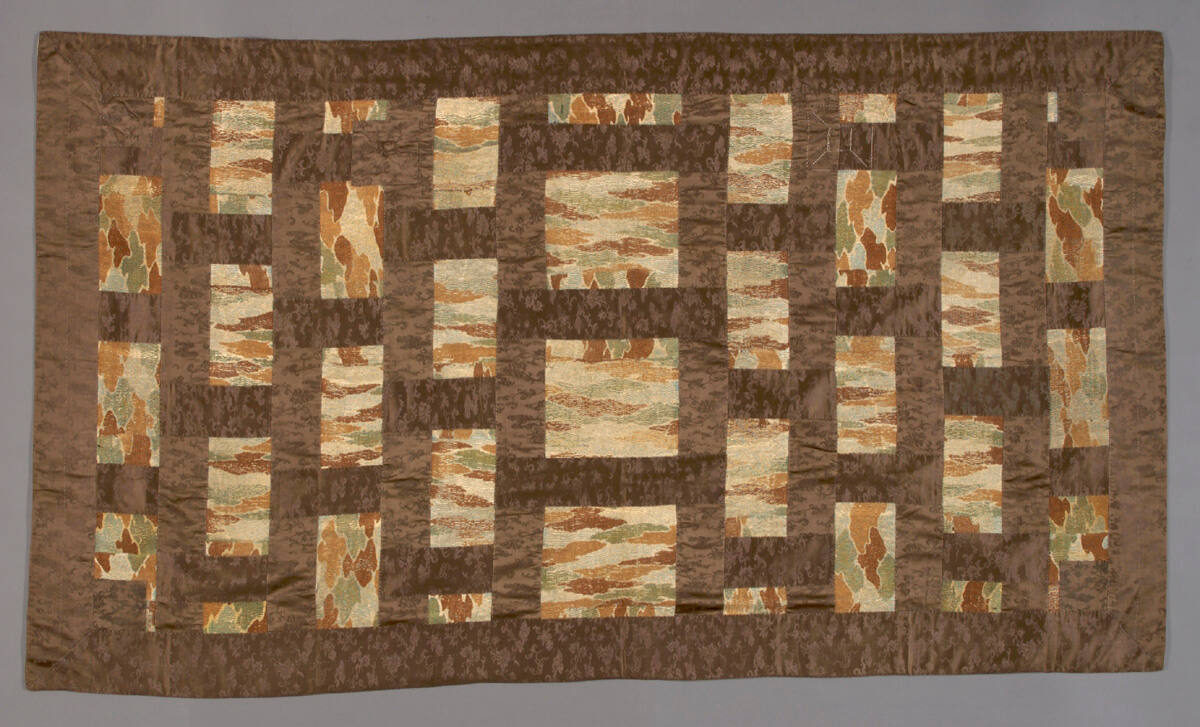
Nine Column Kesa with Distant Mountain Design
When Buddhist priests enter a monastic community, they cut ties with secular pleasures, including fashionable attire. One of the garments they own as a symbol of austerity is a robe or mantle called kesa. They wear kesa during formal ceremonies, draped like a shawl over the left shoulder. Kesa’s origin goes back to India where Buddhist priests wore a robe called kasaya in Sanskrit. A kasaya robe is made of a patchwork composed of scraps of fabric donated to the priests. When Buddhism came to Japan in the mid-500s c.e., this kasaya tradition traveled with it. As a reminder of the original practice, Japanese priests cut pieces out of the fine fabrics given to their temples and sew them together.
With G. Komyo, Kyoto, Japan, by 1931;
Purchased from G. Komyo, through Langdon Warner (1881-1955), by The Nelson-Atkins Museum of Art, Kansas City, MO, 1931.